The bright barge of heaven
Nanna
Called Sin in Akkadian. His crescent measured the month; his great ziggurat at Ur still stands in outline on the plain.
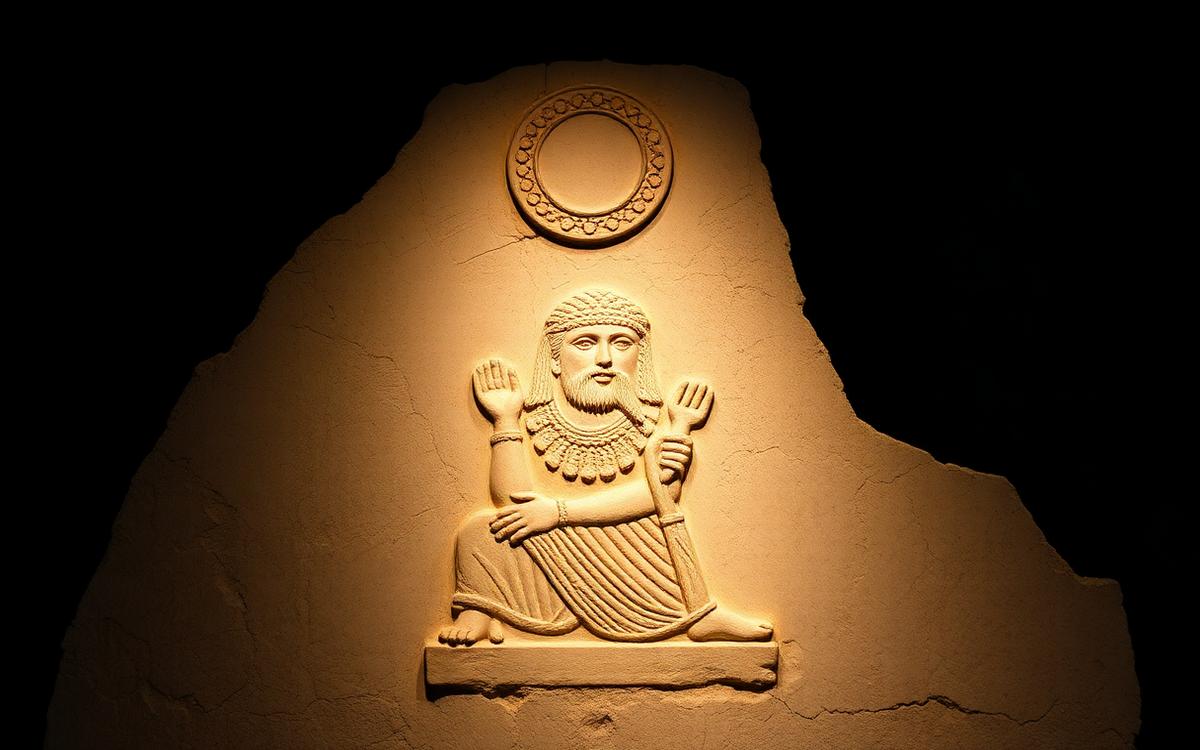
The measure of the month
Mesopotamian time was lunar. A month began when the thin crescent was first sighted after sunset, which made Nanna the god who set the working calendar of temples, contracts and festivals. His number is thirty because that is what he counts. Watching him was a state function: observation reports on the moon's first visibility survive in the royal correspondence of Assyria.
Ur
The ziggurat Ur-Nammu raised for Nanna at Ur is the best preserved in Iraq, its lowest terrace still standing with its three converging stairways. The god's household there included his consort Ningal and a human high priestess, the en, who was often a king's daughter — most famously Enheduanna, the earliest author whose name we know.
The father of the lights
Nanna is the parent of Utu the sun and Inanna the evening star, which puts the moon at the head of the celestial family rather than beneath it. The hierarchy is a nightwatcher's, not an astronomer's: what governs the calendar governs the sky.