Queen of heaven
Inanna
The most restless of the Anunnaki. She takes the me from a drunken Enki and descends to the underworld, passing seven gates and surrendering something at each.
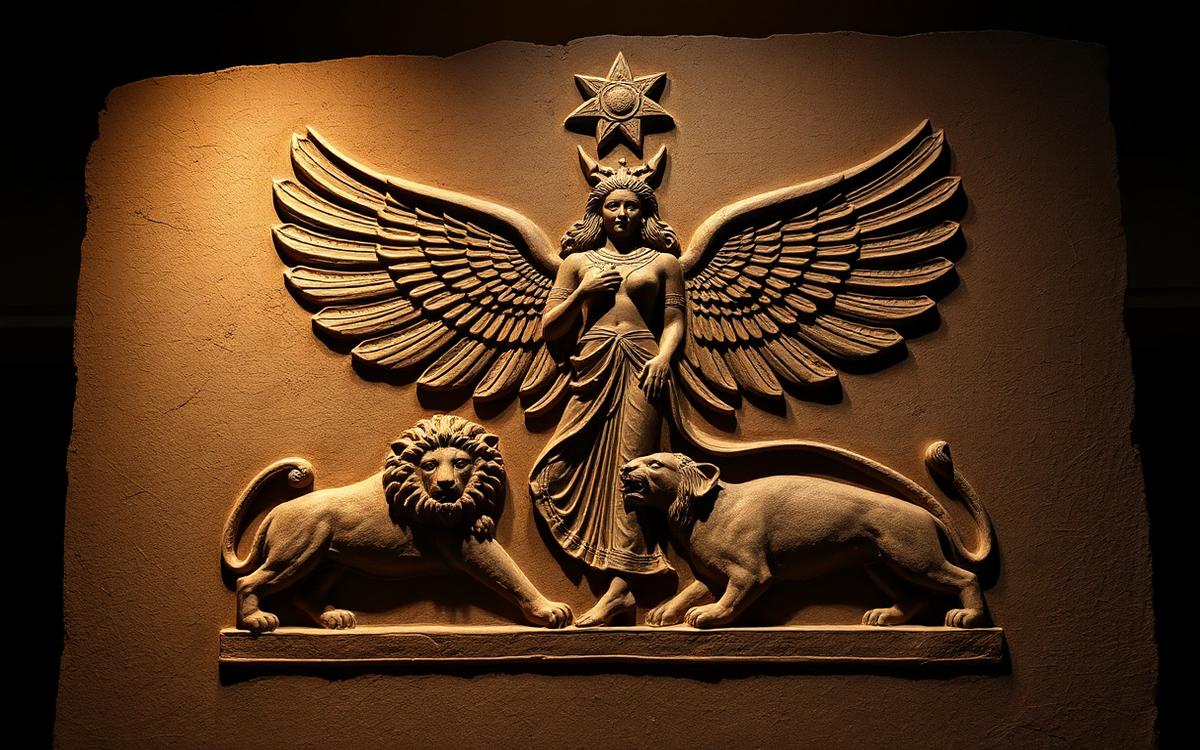
Love and war in one office
Inanna holds two portfolios that later traditions insist on separating. She is desire and she is the battle-shout; the hymns move between the two without apology, calling her the one who makes the young men parade and the one who turns the battlefield into a dance floor. Her ambiguity is structural, not accidental — she is the goddess of everything that overturns order.
The descent
She fastens the seven me about her and goes down to the land of no return. At each of seven gates the gatekeeper Neti removes one ornament — crown, rod, beads, breastplate, ring, robe — until she enters the throne room naked and bowed low. Ereshkigal fixes on her the eye of death and hangs her corpse on a hook. Three days later Enki's mourners revive her with the food and water of life.
The substitute
No one leaves the underworld without leaving someone behind. Inanna returns escorted by demons and finds her husband Dumuzi enthroned and unmourning; she gives him to them with a look. His sister Geshtinanna volunteers to take half the year in his place, and the alternation becomes the calendar itself: the shepherd god down in the dry months, up when the pastures return.