Lady of the stony ground
Ninhursag
The mother of the gods, called Nintu when she pinches off fourteen pieces of clay to make the first people alongside Enki.
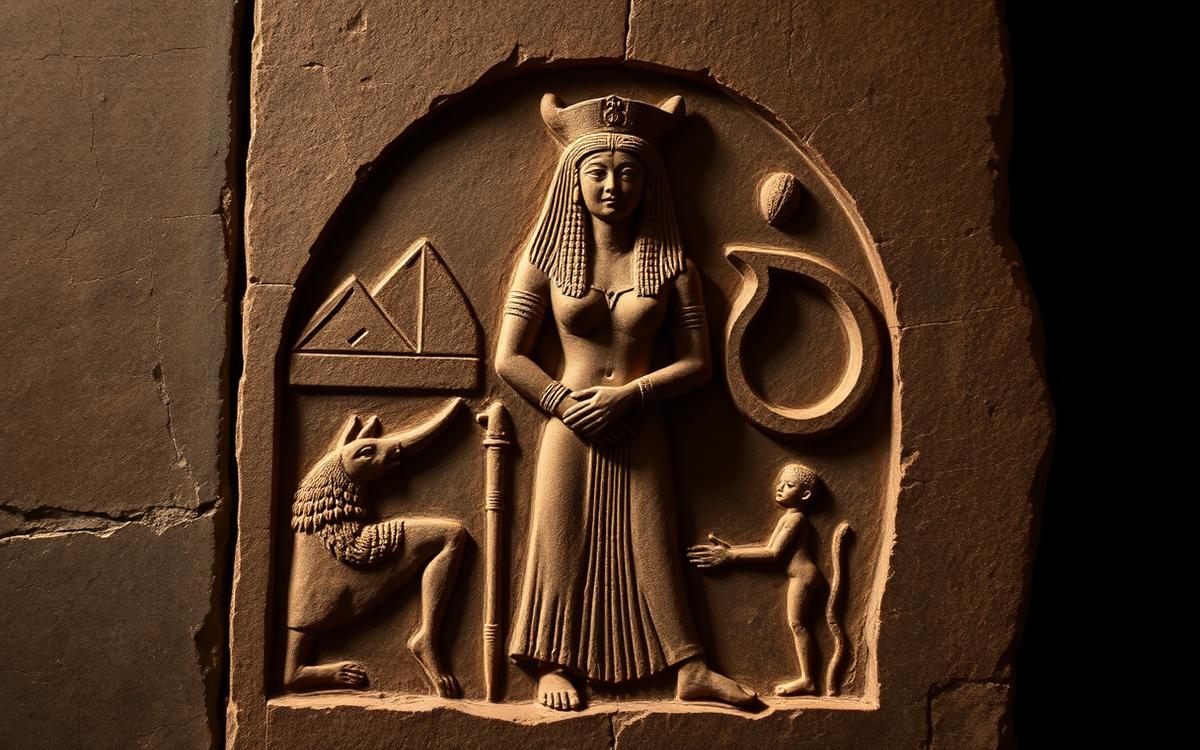
Fourteen pieces of clay
In Atrahasis the making of humanity is delegated to Nintu-Ninhursag. She pinches off fourteen pieces of the god-and-clay mixture, sets seven to the right and seven to the left, places a brick between them, and fourteen womb goddesses take shape from it. The brick is the birthing brick real Mesopotamian women squatted on; the myth is describing a delivery every listener had seen.
Quarrel with Enki
In the Sumerian poem set in Dilmun, Ninhursag curses Enki after he eats the plants she has grown, and eight parts of his body begin to fail. Only she can heal him, and she does it by seating him in her vulva and giving birth to eight healing deities, one for each ailing part — a rib among them, which has kept a long afterlife in comparative mythology.
The mother who withdraws
Ninhursag's authority is the least contested and the least dramatised in the pantheon. She creates, she heals, and she leaves. Later theology quietly folds her functions into other goddesses, but the earliest god lists put her third, immediately after An and Enlil, and Sumerian kings called themselves the ones she nourished with holy milk.