The one who sees
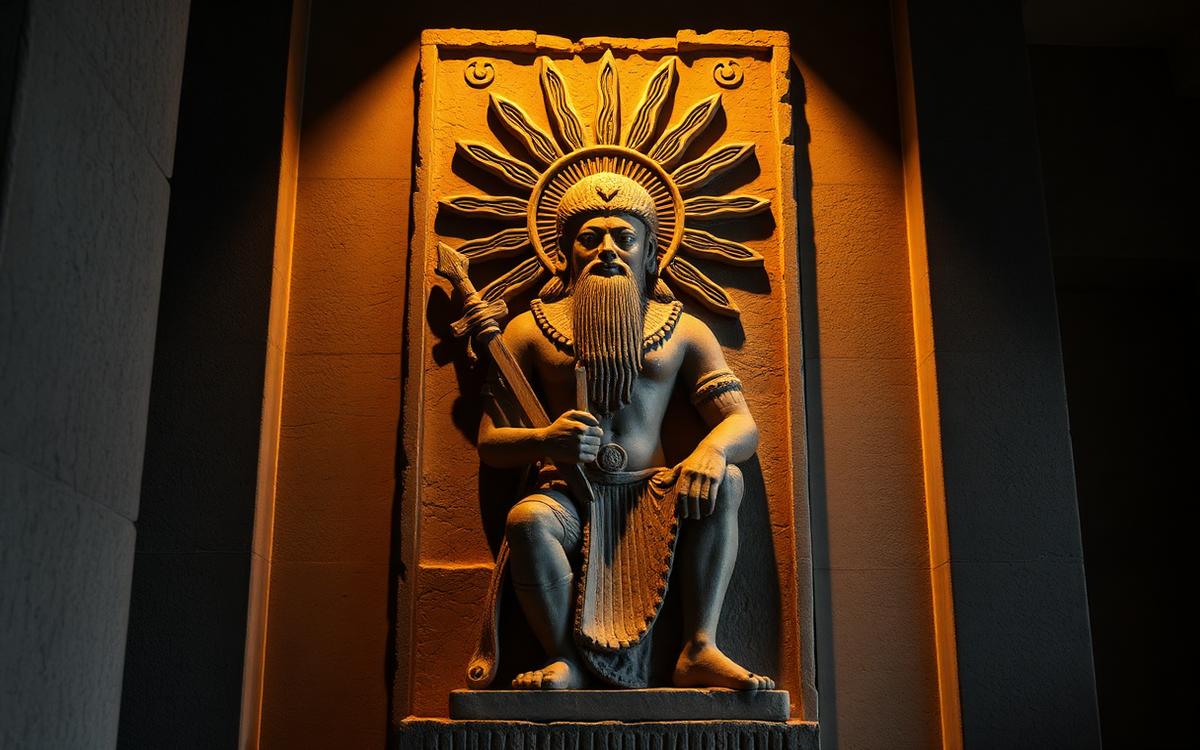
Utu
He sees everything the daylight touches, which makes him the god of witnesses, verdicts and travellers on open ground.
Sight as jurisdiction
Because the sun sees everything between horizon and horizon, Utu becomes the natural guarantor of anything that depends on testimony. Contracts are sworn before him, boundary stones invoke him, and a plaintiff with no human witness addresses him directly. His saw is not a weapon but a tool for cutting through — the instrument of decision.
Hammurabi's stele
At the top of the black diorite stele in the Louvre, the king stands before a seated god with rays at his shoulders receiving the rod and ring. That god is Shamash. The laws below are framed as a report to him: the king is not the source of justice but its administrator, answerable to the one who watches.
The night road
Each evening Utu passes through the gates in the eastern mountain and travels beneath the earth, which makes him one of the few gods who moves freely between the living world and the underworld. Petitioners ask him to carry messages down; Gilgamesh appeals to him before setting out for the cedar forest, and he answers with the thirteen winds.