c. 2000 BCE
The Sumerian King List
Kingship descends from heaven to Eridu, and the first rulers reign for tens of thousands of years — the passage most often quoted, and most often misread, by modern theorists.
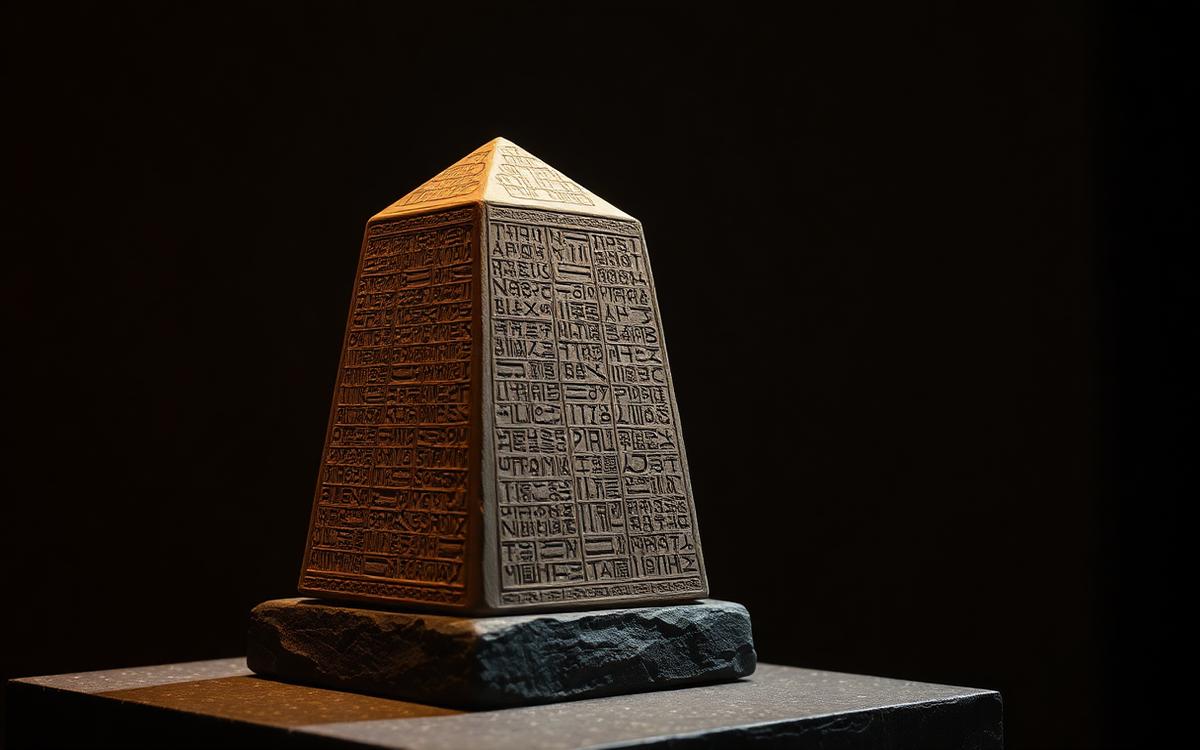
What it actually is
The King List is not a chronicle but a claim: that kingship is a single divine office passed from one city to the next, held by one dynasty at a time. In reality the cities it lists in sequence often ruled simultaneously and fought each other. The document flattens a messy political map into a straight line, because a straight line is what a new ruler needed to stand at the end of.
The long reigns
Alulim's 28,800 years and his successors' comparable figures are the passage that launched a thousand paperbacks. They are written in a base-60 system, and every antediluvian figure resolves into a tidy multiple of 3,600 — the sar, the square of sixty. These are not observations; they are notation, expressing 'immeasurably long ago' in the only vocabulary the scribes had for grandeur.
After the water
The flood functions as a chronological hinge. Reigns immediately after it run to hundreds of years, then drop into the decades, and by the dynasties of Kish and Uruk the list becomes broadly usable history. That gradient — myth easing into record — is the strongest evidence that the numbers were understood symbolically by the people who wrote them.