c. 1900 BCE, Old Babylonian
Atrahasis
The lesser gods strike over forced labour on the canals. Humans are made to take the work, multiply, grow noisy, and are nearly erased by plague, drought and finally flood.
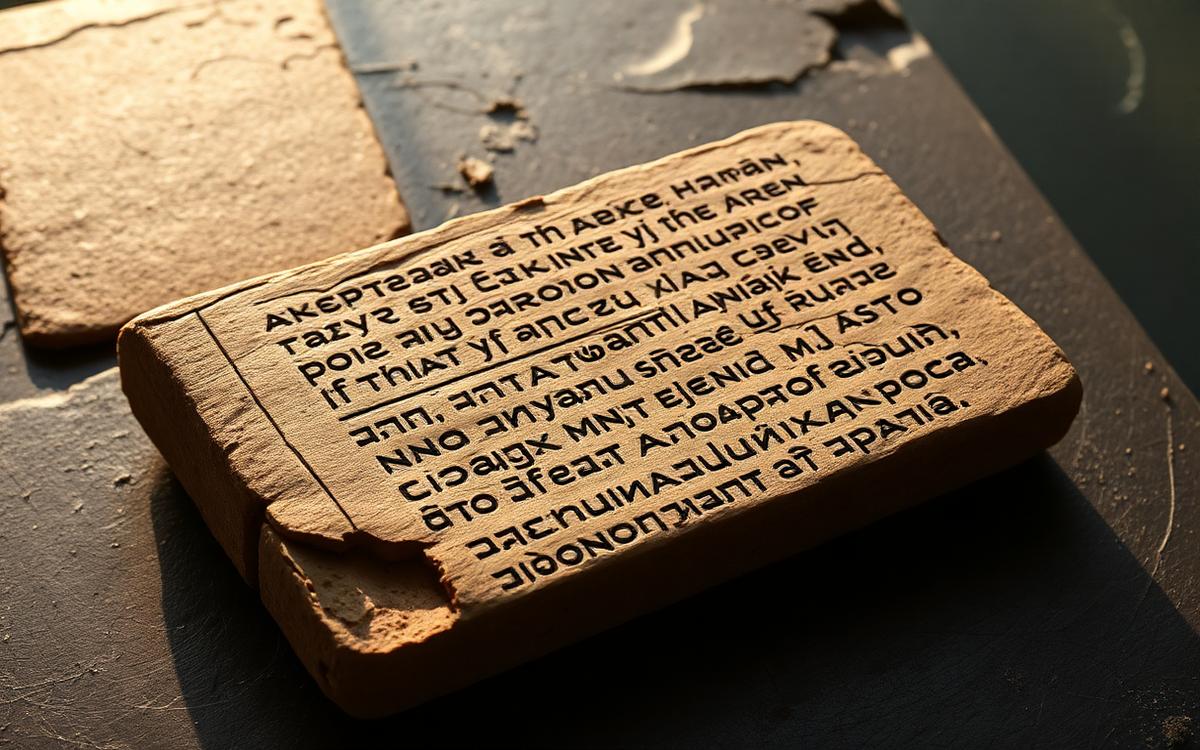
The strike
The poem opens with the Igigi, the junior gods, digging the Tigris and Euphrates for forty years until they burn their tools and surround Enlil's house at night. It is the earliest labour dispute in literature, and the assembly's solution is to invent a replacement workforce rather than reform the conditions. Humanity is created as an industrial relations settlement.
Clay, spit and the blood of a god
Wê-ila, a god described as having personality or intelligence, is slaughtered. His flesh and blood are mixed into clay, the birth goddesses spit on it, and Nintu shapes fourteen pieces. The resulting creature is mortal but carries a divine ghost, the etemmu, which is why the dead persist. This passage is the origin of every 'engineered workforce' claim, and it is a ritual of gestation from beginning to end.
The flood and the settlement
After the flood the gods discover they are hungry — nobody left alive to feed them — and Nintu reproaches Enlil bitterly. The agreement that ends the poem is a compromise: humanity survives, but with stillbirth, infertility and celibate priestesses built in, so the noise never rises to that pitch again. It is a myth about limits, written by a society that irrigated a floodplain.