Lord of the open air
Enlil
Holder of the Tablet of Destinies and the executive will of the council. He sends the flood when humankind grows too loud to let the gods sleep.
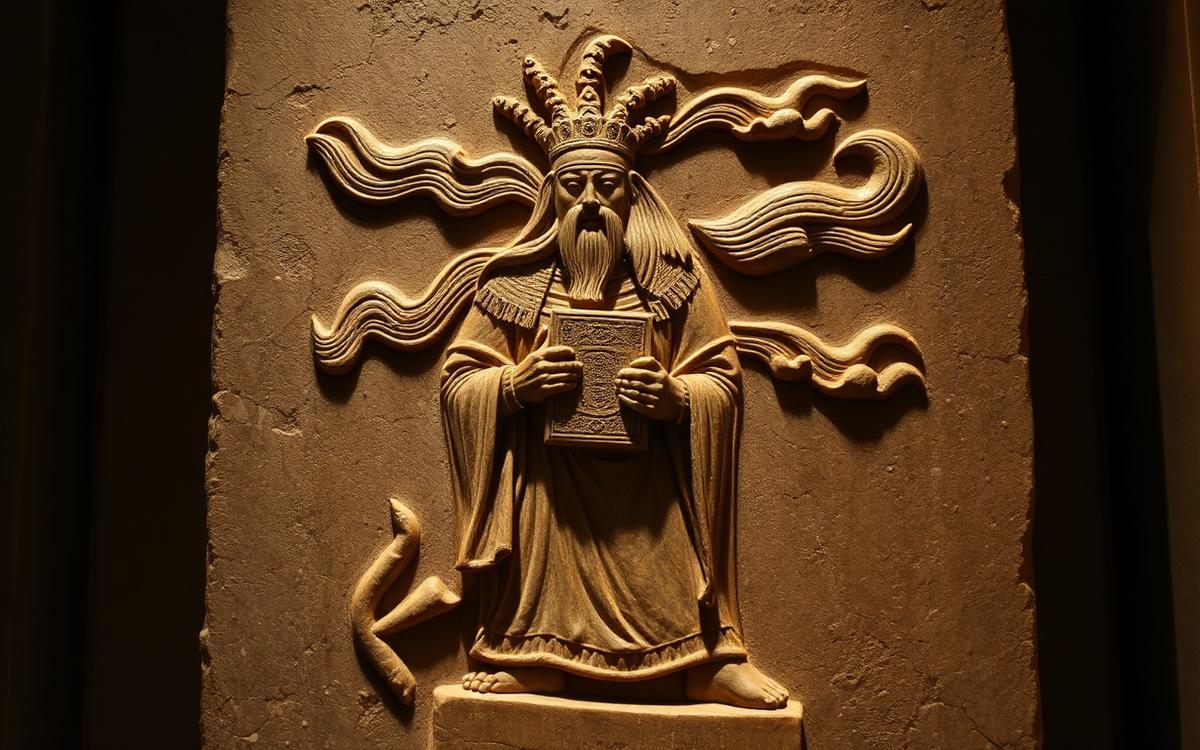
The executive
Enlil is what An's authority looks like once it has to be used. He convenes the assembly, ratifies destinies, and installs kings; Nippur, his city, was never a political capital and precisely for that reason became the place where kingship over all Sumer was confirmed. A ruler who had not been acknowledged at the Ekur was, in the phrase of the scribes, not yet king.
The noise of humankind
In Atrahasis the trouble is acoustic. People multiply until 'the land bellowed like a bull', and Enlil, disturbed in his sleep, tries plague, then drought, then famine, and finally the flood. Modern readers hear a moral failing behind the noise; the text does not supply one. Overpopulation itself is the offence, and the resolution — stillbirth, barren women, celibate priestesses — is demographic rather than ethical.
Anger and accommodation
When the flood fails to erase humanity because Enki has warned Atrahasis, Enlil's fury is real but brief. The assembly negotiates. This is the recurring shape of Mesopotamian myth: no god is omnipotent, decisions are collective, and even the storm must eventually sit down at the table.