Father of the assembly
An
The remote father of the assembly. He grants authority and rarely acts; by the second millennium his decisions are largely delegated to Enlil.
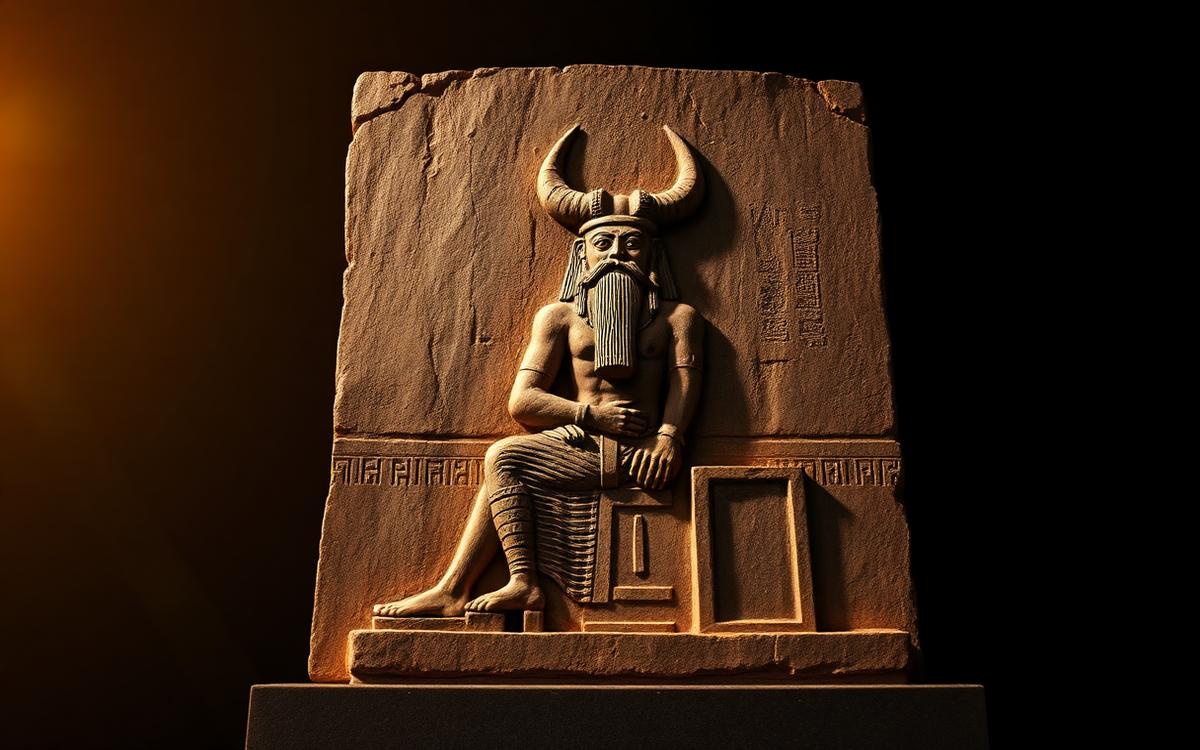
The god who delegates
An is the oldest name in the Sumerian pantheon and the least visible in its stories. His sign, a single star, is also the written determinative placed before every other divine name — before a scribe could write 'god' at all, he wrote An. Yet in narrative he is almost always offstage: seated, consulted, and agreeing. Authority in Mesopotamian myth flows downward from him and is exercised by others.
Kingship descends from heaven
When the King List says that kingship descended from heaven, it is An's heaven that is meant — not a place of departure but a source of legitimacy. A ruler of Uruk did not claim to be An's descendant so much as his tenant, holding the city on loan. The Anunnaki themselves are named from this relationship: a-nun-na-ki, the princely seed of An.
Eclipse by Enlil
By the Old Babylonian period An's executive powers have migrated to Enlil, and later to Marduk, who is granted 'the Anu-power' by the assembly in the Enuma Elish. The transfer is never a coup. It is written as a gift, which is how Mesopotamian theology managed political change: the new god does not replace the old one, he is authorised by him.